
Rote rewards patience, not plane tickets.
Twelve breaks, 27°C water and 20-second swells from the Southern Ocean — but the good days are not on demand. Fly in for ten days and you might score nothing. Stay a season and you get to choose your day, which is how the world-class ones eventually come your way.
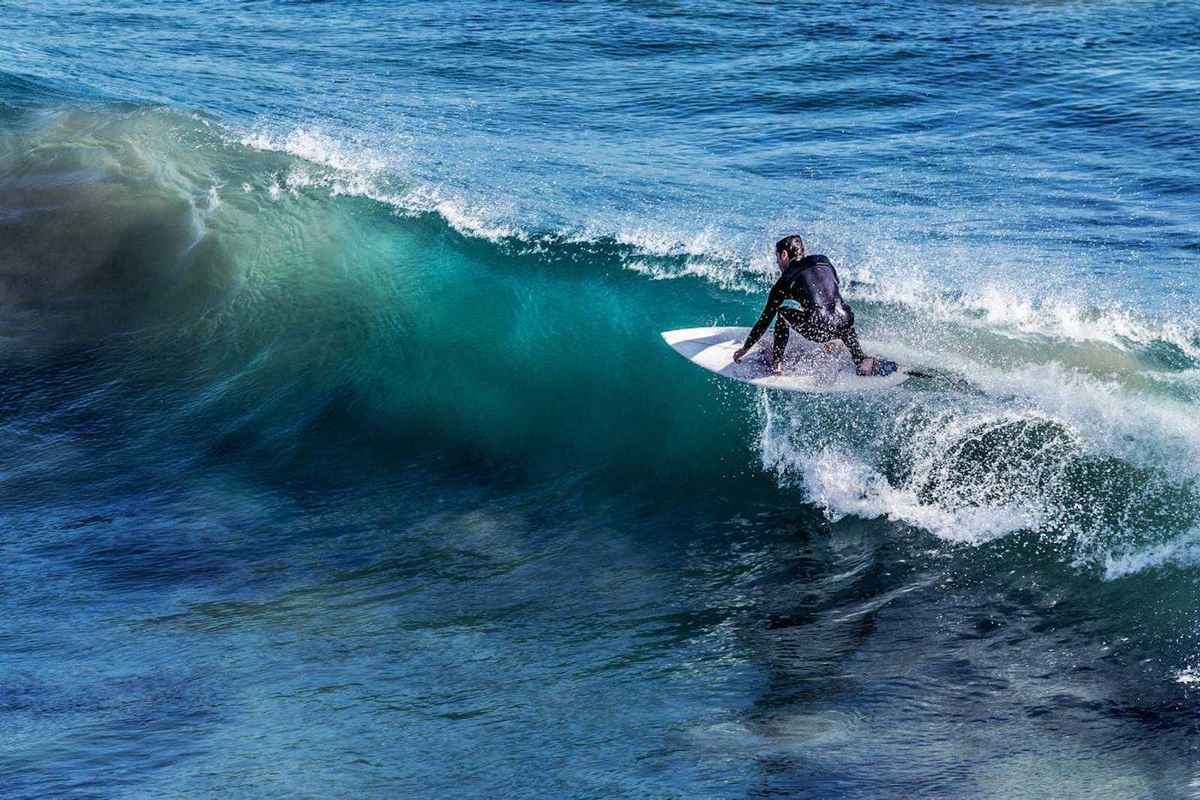
400 meters of mechanical left
Four sections. One reef. A channel paddle-out that makes it accessible even on 10-foot days. T-Land holds from 2 feet to 15+, and the SE trades blow offshore from dawn to dark. You’ll surf it every day you’re here.
Two waves in one
“At low tide it’s a slab. At high tide it’s a rippable right-hander. Same reef, completely different wave.”
Located 16 minutes by scooter from Nemberala, Bo'a experiences cross-shore trade winds. Optimal surfing conditions are at dawn or during the shoulder season when winds subside. Above 8 feet, the lip becomes exceptionally thick.
Thewavesherebelongtowhoeverisstillaroundontherightmorning.
Pick your wave
Sand bottoms for first-timers. Limestone reefs for building confidence. Shallow coral for the days you want to push it.
Sand Bank
1' -- 3'Beach break · On the village beach
Gentle, rolling waves over sand. The safest place to learn to surf on Rote Island, period. No coral, no urchins, no anxiety.
Squeelers
1' -- 5'Lefts & Rights · < 1 km (village beachfront)
A forgiving reef break on soft limestone that works when T-Land is firing and when it's flat. The safest wave in Nemberala and the first stop for every beginner and longboarder on the island.
The Spit
2' -- 6'Lefts & Rights · < 1 km (near T-Land)
A 50-meter gap in the reef, 200 meters south of T-Land, that produces mellow lefts and rights on high tide. Unknown to most visitors and a fun change of pace when the main break is too heavy or too crowded.
Bo'a
A quality right-hander with two personalities: a smooth, walling wave on higher tides, and a terrifying slab on low. When the swell pushes past 8 feet, the lip gets so thick it stops looking like water and starts looking like concrete.
Scooter ride + reef walk (50m) · ~15 minutes by scooter
Do'o
When northwest winds destroy the main Nemberala breaks, Do'o lights up. An uninhabited island with a razor-sharp right-hand barrel that runs on inverted logic: bad weather at T-Land equals perfect conditions here.
Boat only · ~20 minutes by boat
Ndao
A left-hand reef break on Ndao Island, west of Rote. The same trade winds that make T-Land perfect blow directly onshore here, which means Ndao's best days happen when the wind drops -- early mornings and off-season calms.
Boat charter · ~35 minutes by boat
Petrol Bombs
A high-performance reef break with extremely steep take-offs and fast barrel sections over live coral and rock. Named appropriately -- the drops explode and the ride doesn't slow down.
Boat or paddle from nearby accommodation · ~20 minutes by scooter + paddle
Sucky Mamas
A thick, hollow right that throws over impossibly shallow reef. The barrels are heavy, the consequences are real, and the name tells you everything about the locals' opinion of the wave.
Boat access recommended · ~25 minutes by boat
The Bombie
An outer-reef swell magnet that sleeps most of the time and wakes up terrifying. When big south swells hit Rote, The Bombie produces explosive A-frames with vertical drops and zero room for error.
Boat only · ~10 minutes by boat
Ndana
The southernmost surfable island in Indonesia. Ndana sits completely exposed to the raw Indian Ocean, absorbing groundswell energy without any geographic filter. When it's on, two twin waves break on either side of a narrow coral channel -- a right and a left, both heavy.
30-minute boat ride from Nemberala · ~30 minutes by boat
Oeseli
Dormant until 6--8 feet of solid groundswell arrives. When Oeseli wakes up, it produces a left barrel of absurd heaviness with multiple tube sections. Tube specialists only.
Boat charter · ~45 minutes by boat
Three seasons, three different islands
Dry season
SE trades blow offshore at T-Land from dawn to dark. Consistent south-west groundswells, 14–20 second periods. Every south-facing reef fires. Sun every day. The reliable window.
The secret window
Trades die. The ocean goes glass. Bo’a, Ndao, Sucky Mamas — every wind-sensitive spot wakes up. Less consistent swell, but individual sessions can be the best of the year. Lower prices, fewer people.
Inverted logic
NW monsoon flips everything. T-Land goes onshore, but Do’o lights up on those same winds. Cyclonic swells activate breaks that sleep the rest of the year. Not the main season. Still has waves.
“Boardshorts year-round. 27°C doesn’t change between seasons. Bring reef booties for the shallow stuff. Leave the wetsuit at home.”
Boards, boats, schools
Surf schools
Nemberala Beach Surf School runs daily sessions at Sand Bank and Squeelers. Board, rash guard, instructor. Private lessons available. $20–40 per session.
Board rental & repair
Shortboards, longboards, soft-tops from $5/day. Multiple shops in the village. Ding repair available locally. Bring your own fins.
Boat trips to outer reefs
The Bombie, Ndana, Do’o, Oeseli, Ndao — all require a boat. $30–60 depending on distance. Any fisherman or surf camp arranges trips. Budget a full morning and bring water.
Photographers
Local photographers shoot T-Land most days. Check the board at Boatmen Bar for daily drops. Water photography by arrangement.
Swell & forecasting
Rote's south-facing reefs pull the same Southern Ocean groundswell as the rest of Indonesia. Check Surfline and Windy for swell size and wind direction before booking a boat trip, and Wonderful Indonesia for regional travel and entry information.
Surfing Rote — answered
The questions every surfer asks before booking a flight.
Is Rote Island good for surfing?
It depends entirely on how long you stay. Rote has 12+ breaks and T-Land, a 300-to-400-metre left-hander that ranks among Indonesia's best. But the swell is inconsistent and the good days are few, and when one lands the line-up fills quickly. For a one- or two-week surf trip that makes Rote a gamble — there are more reliable destinations in Indonesia. For someone living here for months it works far better, because you can pick the day and the break instead of surfing whatever your trip dates hand you — and now and then that means a quiet session on a very good wave.
Is Rote worth it for a short surf trip?
Honestly, usually not. A ten-day window can pass without a single good day, and the days that do work draw everyone on the island to the same reef. We'd rather say so upfront than sell you a trip. If your plan is a season, a long stay, or a base you return to, the maths reverses completely — patience is the entry ticket to Rote's best waves.
How many surf breaks are there on Rote Island?
At least 12 named surf breaks, plus several seasonal spots that only activate during cyclonic swells. The main breaks include T-Land, Bo'a, Sucky Mamas, Squeelers, The Bombie, Ndana, Petrol Bombs, The Spit, Oeseli, Do'o, Ndao, and Sand Bank.
When is the best time to surf in Rote?
May through October (dry season) delivers the most consistent south-west groundswells and offshore SE trade winds. The shoulder months (March--April and October--November) offer lighter winds and glassy conditions that unlock wind-sensitive spots like Bo'a, Ndao, and Suckies.
Can beginners surf on Rote Island?
Yes. Sand Bank is a sand-bottom beach break with gentle waves ideal for first-timers. Squeelers breaks over soft limestone and is the go-to spot for surf schools. Both are walkable from Nemberala village. Multiple surf schools offer daily lessons with equipment included.
How do I get to Rote Island?
Fly to Kupang (West Timor), then take a 1-hour flight or 2-hour fast ferry to Rote. From Ba'a airport or Pantai Baru ferry terminal, it's a 2.5-hour drive to Nemberala, the main surf village on the south coast.
What is T-Land on Rote Island?
T-Land (officially Besialu Reef) is the main surf break in Nemberala. A 300-to-400-meter mechanical left-hander breaking over shallow coral reef. It has four distinct sections (The Point, The Pyramid, The Mountain, and Bananas) and holds waves from 2 to 15+ feet.
Is the surf in Rote Island crowded?
On the good days, yes — and faster than people expect. Because quality swells are infrequent, everyone on the island surfs the same window: expect 20--30 surfers at T-Land in peak season (July--August). The compensation is variety and timing rather than emptiness: Bo'a, Sucky Mamas, Squeelers, The Bombie, Ndana and the outer reefs hold far fewer people, and outside peak months even T-Land thins out. Residents have the real advantage — they can pick the day and the break instead of surfing whenever their flight happens to land.
How much does it cost to surf on Rote Island?
Board rental is $5/day. Surf lessons at Sand Bank or Squeelers run $20--40 including equipment. Boat trips to outer breaks (Ndana, The Bombie, Do'o) cost $30--60 depending on distance and duration. Accommodation near the breaks starts at $20/night.
Do I need reef booties for surfing on Rote?
Yes, for most breaks. T-Land, Bo'a, Sucky Mamas, The Bombie, and the outer reefs all have sharp coral. The only exceptions are Sand Bank (sand bottom) and Squeelers (soft limestone). Reef booties prevent cuts that can get infected quickly in tropical water.
What board should I bring to Rote Island?
For T-Land in average conditions (3--6ft): your standard shortboard. For bigger days (8ft+) at T-Land, The Bombie, or Ndana: a step-up or semi-gun (7'0"--7'6"). For Squeelers and Sand Bank: a longboard or funboard. Ding repair is available locally. Bring your own fins if you're particular.
The waves reward the people who wait
If you're thinking about a season on Rote rather than a fortnight, tell us when and how long. We'll sort the house, the transfers and the boat days — and tell you honestly what the surf is likely to do.
Talk to us about a long stay